
Key Takeaways
- 01You can start a carpentry business as a solo operation with tools you likely already own — most carpenters begin with $5,000-$15,000 in tools, a work vehicle, insurance, and a business registration
- 02Published 2026 cost guides put self-employed carpenter rates around $40-$100+ per hour, with finish and custom work at the top of the range and master carpenters charging more
- 03Whether you need a license depends on your state and job size: many states only require a contractor license above a dollar threshold, so verify with your state board before bidding
- 04Your hourly rate must cover labor, overhead, AND profit — carpenters who charge their old employee wage as their business rate lose money on every job
- 05Written estimates win carpentry work: itemize materials and labor, get a signature and a deposit before you buy lumber, and invoice the moment the job is done
Here's the short answer: to start a carpentry business, pick a niche you can sell (finish work, framing, decks, or custom builds), register the business, get insured, price your labor so it covers overhead and profit — not just your old wage — and put a professional estimate in front of every prospect. Most solo carpenters can go from employee to legitimate business in a few weeks without borrowing heavily, because the biggest startup asset is the skill and the tools you already have.
What trips people up isn't the woodworking. It's the business side: licensing thresholds that vary by state, underpriced labor, and slow invoicing that turns finished jobs into unpaid ones. This guide walks through all of it in order.
Is Carpentry a Good Business to Start?
Carpentry has two advantages over many trades as a first business. The startup cost is low if you already own your core tools, and the work spans everything from half-day trim repairs to months-long custom builds — so you can start small and move up as your reputation grows.
The rates support a real business, too. Published 2026 cost guides such as HomeGuide and Angi put typical self-employed carpenter rates at roughly $40 to $100+ per hour depending on specialty and region — framing at the lower end, finish and trim work in the middle, and master-level custom work running well above $100 per hour in many markets. Those are billing rates, not take-home pay: they have to cover your tools, vehicle, insurance, and unpaid hours, which is exactly why Step 6 below matters so much.
The trade-off is competition. Carpentry has a low barrier to entry, so plenty of underpriced part-timers are bidding against you. You won't beat them on price — you'll beat them by looking professional: licensed and insured, written estimates, clean invoices, and answered phone calls.
How to Start a Carpentry Business in 8 Steps
Step 1: Choose your carpentry niche
"Carpenter" covers too much ground to market well. Pick a primary lane and get known for it:
- Finish and trim carpentry — baseboards, crown molding, doors, built-ins. High rates, low material risk, mostly indoor work.
- Framing and structural work — bigger contracts, but you'll usually work under general contractors and hit licensing thresholds sooner.
- Decks, fences, and outdoor structures — seasonal in most regions, easy to photograph for marketing, and homeowners buy them directly.
- Custom furniture and cabinetry — the highest skill premium, but you'll need shop space and longer sales cycles.
- Small repairs and punch-list work — steady demand and fast payment; just know where your state draws the line between handyman work and contractor work.
General contractors and property managers hire the same finish carpenter over and over. One or two of those relationships can fill your calendar for your entire first year — homeowners come later, through referrals.
Step 2: Check your state's licensing rules before you bid
Carpentry licensing is decided state by state, and often job by job. Many states don't license carpentry as its own trade but do require a general contractor license once a job's value crosses a threshold — and that threshold might be a few hundred dollars in one state and tens of thousands in another. Cities and counties can add their own registration on top.
Bidding a job above your state's licensing threshold without a license can mean fines and — worse — losing the legal right to collect payment for finished work in some states. Rules vary widely, so verify the current requirements with your state's contractor licensing board before you quote anything sizable.
Step 3: Register the business
Pick a name (our list of carpentry business names is a good starting point if you're stuck), then make it official: register the entity with your state, get an EIN from the IRS for free, and open a separate business bank account so job money and grocery money never mix.
Most solo carpenters start as a sole proprietorship or a single-member LLC. The LLC costs a little more to set up but separates your personal assets from business liabilities — worth understanding before you pick; see our breakdown of sole proprietor vs. independent contractor setups and talk to an accountant if you're unsure.
Step 4: Get insured
General liability insurance is non-negotiable — one cracked granite countertop or a nail through a water line can cost more than your first year's profit. Most general contractors and commercial clients won't let you on site without a certificate of insurance, so this is a sales tool as much as protection.
Depending on your setup, you may also need commercial auto coverage for the work vehicle, inland marine coverage for tools, and workers' comp once you hire. Costs vary by state, revenue, and crew size — our guide to contractor insurance costs breaks down what drives the premium.
Step 5: Equip yourself — tools, vehicle, and workspace
If you've worked as a carpenter, you likely own most of your hand and power tools already. The gaps for going independent are usually a reliable work vehicle, jobsite-quality gear you used to borrow from an employer (compressor, ladders, stands), and somewhere to store it all.
Skip the shop lease at the start unless cabinetry is your niche — a garage plus jobsite work covers most carpentry businesses for the first year or two.
Step 6: Set your rates so they cover more than your labor
This is the step that decides whether you've built a business or bought yourself a low-paying job. Your rate has to cover three things: your labor, your overhead (insurance, vehicle, tools, phone, software, unpaid estimating hours), and profit on top.
Say you want to pay yourself $35 per hour and you'll realistically bill 25 hours a week. If your overhead runs $1,500 a month, that's about $15 per billable hour ($1,500 ÷ ~100 billable hours). Add a 20% profit margin and your floor is roughly ($35 + $15) ÷ 0.8 = $62.50 per hour — before you've priced a single board. Charge your old employee wage of $35 and you're losing money on every job.
Run your own numbers through our free labor cost calculator and markup calculator, and price materials with a markup too — 10–20% on lumber and hardware is common, and it covers the pickup runs and returns nobody pays you for otherwise.
Step 7: Estimate and invoice like a professional
Carpentry jobs are won and lost on the estimate. A written, itemized estimate — materials, labor, timeline, and payment terms — beats a number scribbled on a card, every time. Walk the job, measure twice, and follow a consistent process like the one in our guide to estimating carpentry jobs.
Then protect your cash flow: ask for a deposit before you buy materials on any sizable job, get the estimate signed, and send the invoice the day the job wraps — not at the end of the month. Estimating software built for contractors lets you do all of it from your phone: create the estimate on-site, collect an e-signature, convert it to an invoice, and take payment without a second trip. A professional carpentry invoice template is a free place to start.
Step 8: Market the business and land your first jobs
Your first customers are people who already know your work: former employers' clients (where that's ethical and allowed), general contractors who need a reliable finish sub, and property managers with endless punch lists. Tell all of them you're in business — directly, by phone.
Then build the compounding channels: a Google Business Profile with photos of finished work (decks and built-ins photograph beautifully — use that), reviews requested after every job, and a simple website. Our guides to marketing strategies for contractors and SEO for contractors cover the playbook in detail.
What Does It Cost to Start a Carpentry Business?
Here's a realistic startup budget for a solo carpenter who already owns basic tools. Treat it as a worked example to adapt, not a quote:
Example Startup Costs: Solo Carpentry Business
| Item | Low End | Higher End |
|---|---|---|
| Business registration, LLC filing, EIN | $50 | $800 |
| General liability insurance (first year) | $500 | $1,500 |
| Tool gaps and jobsite equipment | $1,000 | $5,000 |
| Used work van or truck (if needed) | $5,000 | $20,000 |
| Ladders, storage, safety gear | $300 | $1,000 |
| Website, Google profile, initial marketing | $100 | $1,500 |
| Estimating and invoicing software | $0 (free trials) | $500/yr |
If you already have a usable vehicle and a full tool kit, the true out-of-pocket to operate legitimately — registration, insurance, and basic marketing — can land under $3,000. The vehicle is the swing item; don't finance a new truck before you have recurring work.
How Much Can a Carpentry Business Make?
For a solo operation, the math is straightforward: billable hours × rate, minus overhead and materials. At the example floor rate of $62.50/hour and 25 billable hours a week, that's roughly $78,000 a year in labor billings before overhead — and experienced finish and custom carpenters billing $90–$125/hour in strong markets do considerably better. The two levers that matter most are raising your effective rate (specialize, photograph your work, ask for reviews) and protecting billable hours (faster estimates, less windshield time, deposits so jobs don't stall).
Win Your First Carpentry Jobs with Professional Estimates
Create itemized estimates on-site, get them e-signed, and convert them to invoices in one tap. InvoiceOwl is built for trade businesses like yours.
Start Your FREE TrialFrequently Asked Questions
It depends on your state and the size of the jobs you take. Many states don't license carpentry as a separate trade but require a general contractor license once a project's value passes a threshold, and some cities add their own registration. Check with your state contractor licensing board before bidding — working over the threshold unlicensed can cost you fines and, in some states, the right to collect payment.
Published 2026 cost guides put typical carpenter rates around $40–$100+ per hour, with finish and custom work at the higher end. But set your own rate from your numbers, not the average: your target pay plus overhead per billable hour, divided by (1 − your profit margin). For most solo carpenters that lands well above their old employee wage — usually $60/hour or more.
If you already own tools and a vehicle, you can start with very little — registration, basic insurance, and free-trial software can come in under a few thousand dollars. What you shouldn't skip is insurance: it's the one cost that protects everything else, and most contractors and commercial clients require proof of it before you can work.
It can be, if your rate covers overhead and profit rather than just your wage. A solo carpenter billing 25 hours a week at $60–$90/hour grosses $78,000–$117,000 a year in labor before overhead. The common failure mode isn't lack of work — it's underpricing, unbilled hours, and slow-paying customers, all of which are fixable with better estimating and invoicing habits.
Many solo carpenters start as sole proprietors and form an LLC once revenue justifies it, while others start with the LLC for the liability separation from day one — a real consideration in a trade where a mistake can damage someone's home. Formation costs and rules vary by state, so weigh the filing fees against the protection and talk to an accountant about the tax side.
Conclusion
Starting a carpentry business is mostly about doing ordinary things in the right order: pick a niche, get legal and insured, price your labor like a business instead of a wage, and make every estimate and invoice look as clean as your joinery. The carpenters who thrive aren't always the best woodworkers — they're the ones who show up with proof of insurance, a written estimate, and an invoice the customer can pay on the spot.
Start with one relationship — a GC, a property manager, a busy remodeler — and let the quality of the work plus the professionalism of the paperwork do the compounding. And when you're ready to look the part from day one, estimating and invoicing software for carpentry contractors handles the paperwork half.
Related Resources

10 Best Apps for Painting Contractors in 2026
Are you a painting contractor looking to boost productivity? Here are the best apps for painting contractors that can help scale your business to new heights.
Read more
6 Best Construction Estimating Software Contractors Should Try
Associated with the construction industry for a while? Explore 6 most popular estimator software to reduce your business paperwork. Follow the given steps to make construction estimates using automated accounting software.
Read more
10 Best Electrician Apps for Your Business in 2026
The best electrician apps for 2026 — free NEC references and wire-size calculators, plus estimating, invoicing, and scheduling apps compared with current pricing.
Read more
10 Best Lawn Care Apps for Contractors in 2026
Managing a lawn care business can be overwhelming without the right tools. Here are the best lawn care apps for contractors to effectively run their businesses.
Read more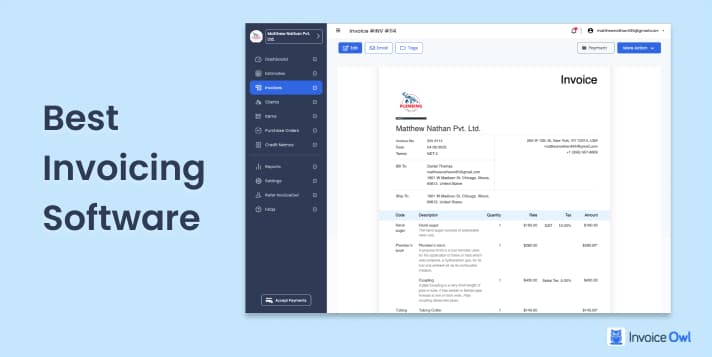
Best Invoicing Software for Small Businesses (2026)
Compare the top invoicing software solutions for small businesses and contractors. Find detailed reviews, pricing, features, and user feedback to choose the right tool for your needs.
Read moreBest Invoicing Software for Small Businesses and Contractors
Pick the best invoicing software for your contracting business by comparing the best 11 invoicing software curated referring the user reviews on various platform.
Read more
15 Best Flooring Estimating Software: Complete Guide
Compare the top 15 flooring estimating software solutions. Detailed reviews, pricing, and features to help contractors make informed decisions.
Read more
How to Bid a Paint Job- Complete Estimation Process
Master bidding for paint jobs with expert insights on pricing, materials, labor, and insurance. Complete guide for painting contractors to boost profitability.
Read more10 Best Apps for Painting Contractors in 2026
Are you a painting contractor looking to boost productivity? Here are the best apps for painting contractors that can help scale your business to new heights.
Read more6 Best Construction Estimating Software Contractors Should Try
Associated with the construction industry for a while? Explore 6 most popular estimator software to reduce your business paperwork. Follow the given steps to make construction estimates using automated accounting software.
Read more10 Best Electrician Apps for Your Business in 2026
The best electrician apps for 2026 — free NEC references and wire-size calculators, plus estimating, invoicing, and scheduling apps compared with current pricing.
Read more10 Best Lawn Care Apps for Contractors in 2026
Managing a lawn care business can be overwhelming without the right tools. Here are the best lawn care apps for contractors to effectively run their businesses.
Read moreBest Invoicing Software for Small Businesses (2026)
Compare the top invoicing software solutions for small businesses and contractors. Find detailed reviews, pricing, features, and user feedback to choose the right tool for your needs.
Read moreBest Invoicing Software for Small Businesses and Contractors
Pick the best invoicing software for your contracting business by comparing the best 11 invoicing software curated referring the user reviews on various platform.
Read more15 Best Flooring Estimating Software: Complete Guide
Compare the top 15 flooring estimating software solutions. Detailed reviews, pricing, and features to help contractors make informed decisions.
Read moreHow to Bid a Paint Job- Complete Estimation Process
Master bidding for paint jobs with expert insights on pricing, materials, labor, and insurance. Complete guide for painting contractors to boost profitability.
Read more10 Best Apps for Painting Contractors in 2026
Are you a painting contractor looking to boost productivity? Here are the best apps for painting contractors that can help scale your business to new heights.
Read more6 Best Construction Estimating Software Contractors Should Try
Associated with the construction industry for a while? Explore 6 most popular estimator software to reduce your business paperwork. Follow the given steps to make construction estimates using automated accounting software.
Read more10 Best Electrician Apps for Your Business in 2026
The best electrician apps for 2026 — free NEC references and wire-size calculators, plus estimating, invoicing, and scheduling apps compared with current pricing.
Read more10 Best Lawn Care Apps for Contractors in 2026
Managing a lawn care business can be overwhelming without the right tools. Here are the best lawn care apps for contractors to effectively run their businesses.
Read moreBest Invoicing Software for Small Businesses (2026)
Compare the top invoicing software solutions for small businesses and contractors. Find detailed reviews, pricing, features, and user feedback to choose the right tool for your needs.
Read moreBest Invoicing Software for Small Businesses and Contractors
Pick the best invoicing software for your contracting business by comparing the best 11 invoicing software curated referring the user reviews on various platform.
Read more15 Best Flooring Estimating Software: Complete Guide
Compare the top 15 flooring estimating software solutions. Detailed reviews, pricing, and features to help contractors make informed decisions.
Read moreHow to Bid a Paint Job- Complete Estimation Process
Master bidding for paint jobs with expert insights on pricing, materials, labor, and insurance. Complete guide for painting contractors to boost profitability.
Read more