
Key Takeaways
- 01Retainage is a percentage of each progress payment — typically 5% to 10% — that the owner or general contractor withholds until the work is substantially complete
- 02On a $120,000 job with 10% retainage, you finance $12,000 of your own work until release, which is often most or all of your profit margin on the job
- 03State laws differ widely on caps, deadlines, and interest; several states now cap retainage at 5% on private work, including California for contracts signed on or after January 1, 2026
- 04Show retainage as its own line on every progress invoice and track the withheld balance separately — retainage that isn't tracked is retainage that gets forgotten
- 05Retainage is released after substantial completion and punch-list work, but usually only after you request it in writing — don't wait for the check to find you
Retainage is a percentage of each progress payment — usually 5% to 10% — that the project owner holds back from the contractor until the job is finished and accepted. The general contractor typically withholds the same percentage from subcontractors. It's the industry's insurance policy: the held-back money gives everyone above you a financial reason to believe you'll come back and finish the punch list.
That's the definition. The part that matters to your business is the cash: on a typical job, retainage roughly equals your profit margin, which means you can finish 100% of the work, get paid on time on every invoice, and still not have earned a dollar until the retainage is released. This guide covers how retainage works, what the rules allow, and how to bill and chase it so the last 10% doesn't become a donation.
What Is Retainage in Construction?
Retainage (also called retention or a holdback) is money you've already earned that the paying party keeps until the project reaches a defined milestone — usually substantial completion or final acceptance. It's not a fee and not a penalty. It's a contractual delay in paying you the full value of work you've completed.
It appears on almost all commercial and public construction work and on many larger residential projects. If you're billing a job through progress invoices, expect the contract to say something like: "Owner shall retain ten percent (10%) of each progress payment until substantial completion."
Three things to understand up front:
- It flows downhill. If the owner withholds 10% from the general contractor, the GC will almost always withhold at least 10% from you as a subcontractor. Some states limit withholding more from a sub than is being withheld from the GC — but "the owner is holding my retainage" is the standard reason your retainage sits unpaid.
- It's earned money. Retainage is a receivable, not a discount. It belongs on your books and in your collection process just like any unpaid invoice.
- It's negotiable — before you sign. The percentage, any step-down at 50% completion, and the release conditions are all terms of the construction contract. After you sign, you're negotiating from a much weaker position.
How Retainage Works: A Worked Example
Say you land a $120,000 kitchen-and-addition remodel billed in five progress payments, and the contract sets 10% retainage. Here's what actually hits your bank account:
Example: $120,000 Job, 10% Retainage
| Progress invoice | Amount billed | Retainage withheld | Cash you receive |
|---|---|---|---|
| Invoice 1 — foundation & framing | $30,000 | $3,000 | $27,000 |
| Invoice 2 — rough-in | $25,000 | $2,500 | $22,500 |
| Invoice 3 — drywall & finishes | $25,000 | $2,500 | $22,500 |
| Invoice 4 — cabinets & fixtures | $25,000 | $2,500 | $22,500 |
| Invoice 5 — final | $15,000 | $1,500 | $13,500 |
| Retainage release (after acceptance) | — | — | $12,000 |
Every invoice was approved and paid "in full," and you're still owed $12,000 when the last coat of paint dries. If your planned profit on the job was 10%, that $12,000 is your profit — everything you've collected so far has gone to labor, materials, and overhead. This is why how much profit you actually make in construction depends as much on collecting retainage as on estimating well.
Now multiply by a busy season. A contractor running four jobs like this at once has $48,000 of earned money sitting in other people's bank accounts. That's the real cost of retainage: you are the lender, at 0% interest, whether you planned to be or not.
Why Retainage Exists
Retainage isn't arbitrary — owners and GCs hold it for reasons worth understanding, because they're also the arguments you'll face when you push back:
- Completion insurance. If a contractor walks off the job at 90%, the withheld money funds hiring someone else to finish.
- Punch-list leverage. The final 5-10% is what motivates crews to come back for the door that sticks and the outlet that doesn't work.
- Defect protection. If workmanship problems surface at final inspection, the owner has money in hand rather than a lawsuit to file.
Fair enough. But the same logic cuts both ways: once you've completed the punch list and the work is accepted, every justification for holding your money is gone. Treating release as automatic — rather than something you actively request and follow up on — is how retainage quietly ages into a write-off.
Retainage Rules Vary by State
Retainage is regulated state by state, and the rules for public and private projects usually differ within the same state. Percentage caps, release deadlines, escrow requirements, and interest on late-released retainage all vary — and legislatures have been actively changing these laws. Verify current rules with your state's statutes or a construction attorney before signing or withholding.
That said, the broad picture as of late 2026:
- 10% was the historical norm, and it's still common on private work in states without caps.
- The trend is toward 5% caps. A number of states now cap retainage at 5% on private and/or public projects, and more have bills in motion. California is a prominent recent example: for private construction contracts entered into on or after January 1, 2026, retention is capped at 5% of each progress payment and 5% of the total contract price. New York and Mississippi have also enacted 5% caps on many private projects in recent years.
- Public jobs play by their own rules. Federal work under the FAR generally discourages retainage where the contractor is performing satisfactorily, and state/municipal projects often have their own statutory percentages, escrow accounts, or step-down schedules.
- Release deadlines exist in many states — often a set number of days after completion or acceptance — and some states owe you interest or penalties when retainage is released late. If a GC is sitting on your money past the statutory deadline, that leverage is worth knowing about.
Also remember that retainage and lien rights interact: in many states, the deadline to file a mechanics lien doesn't wait politely for the owner to release your retainage. If release is dragging on and your lien deadline is approaching, get advice before the deadline passes, not after.
Bill Progress Payments and Track Every Dollar Owed
InvoiceOwl lets you create professional progress invoices, track exactly what's been paid, and see what's still outstanding — including that retainage balance.
Start Your FREE TrialHow to Bill Retainage on Your Invoices
Retainage handled badly looks like this: the invoice says $30,000, the check says $27,000, and nobody wrote down the difference. Six months later, no one is sure what's owed. Handle it like this instead:
1. Put retainage in the payment schedule before work starts
Your estimate and contract should state the retainage percentage, what it applies to, and exactly what triggers release. If the client hasn't mentioned retainage, don't introduce it — but on commercial work, assume it's coming and get the terms in writing.
2. Show it as its own line on every progress invoice
Bill the full value of the work completed, then show the withholding explicitly: work completed $30,000, less 10% retainage ($3,000), amount due $27,000. Now the paper trail matches the payment, and the client is reminded on every invoice that the held money is yours. A clean, itemized construction invoice makes this easy to read.
3. Track the retainage balance as its own receivable
Keep a running total of withheld retainage per job. With invoice tracking, you can see at a glance what's been billed, what's been paid, and what's still outstanding — so the $12,000 doesn't fall out of view just because every invoice shows as "paid."
4. Invoice for the retainage release — don't just wait
When you hit substantial completion and finish the punch list, send a final invoice specifically for the retainage amount, referencing the contract terms and completion date. A written request starts the clock on any statutory release deadline and turns "we'll get to it" into an overdue invoice you can chase like any other — including late fees or interest where your contract and state law allow.
Protecting Your Cash Flow from Retainage
You usually can't make retainage disappear, but you can blunt it:
That pricing point deserves a number: if $12,000 of a job's value will arrive four to six months after you've paid for the labor and materials behind it, your markup has to carry that financing cost. Contractors who ignore it are quoting a lower price than they think they are. The same logic applies to change orders — work added mid-job usually inherits the contract's retainage terms, so bill it formally, not on a handshake.
When and How Retainage Gets Released
Typical release sequence on a well-run job:
- Substantial completion — the project is usable for its intended purpose. Many contracts release some or all retainage here; others wait for final completion.
- Punch list — you complete the documented list of remaining items. Get sign-off in writing as each item closes.
- Written request — you invoice for the retainage, attaching any required lien waivers, warranties, or closeout documents. Missing closeout paperwork is the most common legitimate reason retainage sits unpaid, so submit it with the request instead of after the first refusal.
- Payment — within the contractual or statutory window. If it doesn't arrive, follow up in writing, reference any statutory deadline and interest, and escalate the way you would any overdue payment — reminder, demand letter, then lien or legal advice if the deadline is approaching.
As a subcontractor, add one step: find out when the owner releases retainage to the GC, because many subcontracts tie your release to that event. "Paid-when-paid" and "paid-if-paid" clauses are treated very differently from state to state — another item for the "verify locally" list.
Frequently Asked Questions
5% to 10% of each progress payment is the standard range. 10% has been the historical default on private work, but several states now cap retainage at 5%, and public projects often set their own percentages by statute. The contract controls within whatever your state allows, so check both.
Yes. "Retainage," "retention," and "holdback" all describe the same practice: withholding a percentage of earned progress payments until completion. You'll see "retention" more often in some regions and in accounting software; the mechanics are identical.
Less often than on commercial work, but it appears on larger residential projects, especially where a bank is funding construction draws — lenders frequently require it. On a small direct-to-homeowner job, retainage is unusual, and a deposit-plus-progress-payments schedule is the more common structure.
In some states, no — statutes prohibit withholding a higher percentage from a sub than is withheld from the GC on that project. In others, it's whatever the subcontract says. Read the retainage clause of your subcontract before signing, and check your state's rules if the GC's number is higher than the owner's.
It depends on the contract trigger (substantial versus final completion) and your state's deadlines. In practice, subcontractors commonly wait weeks to several months after finishing their own work, since release often depends on the whole project closing out. You can shorten the wait by submitting closeout documents promptly and invoicing for the retainage in writing rather than waiting to be paid spontaneously.
Treat it as the overdue receivable it is: send a written demand referencing the contract and completion date, invoke any statutory deadline and interest your state provides, and check your mechanics lien deadline before it expires. If the amount justifies it, a construction attorney's demand letter often gets faster results than another phone call. Document everything — the paper trail from your progress invoices is your evidence.
Conclusion
Retainage is a fact of life on commercial construction: 5-10% of every payment held until the end, flowing down from owner to GC to sub. You can't opt out of it, but you can stop it from surprising you — negotiate the percentage and a step-down before signing, show the withholding on every progress invoice, track the balance like the receivable it is, and invoice for release the day you've earned it.
The contractors who get hurt by retainage are the ones who treat it as background noise. The ones who don't are running their billing through invoicing software that shows them, on every job, exactly how much of their money is still out there.
Related Resources

5 Step Guide on How to Pay Independent Subcontractors
Learn best practices for paying independent subcontractors with this complete guide. From tax considerations to payment methods, stay compliant and efficient.
Read more
6 Best Construction Estimating Software Contractors Should Try
Associated with the construction industry for a while? Explore 6 most popular estimator software to reduce your business paperwork. Follow the given steps to make construction estimates using automated accounting software.
Read more
Contractor Payment Terms: Standard Terms, Examples & Late-Fee Language
What payment terms contractors actually use. Net 30, deposits, progress payments, 2/10 Net 30, and late-fee language, with examples for residential and commercial work.
Read more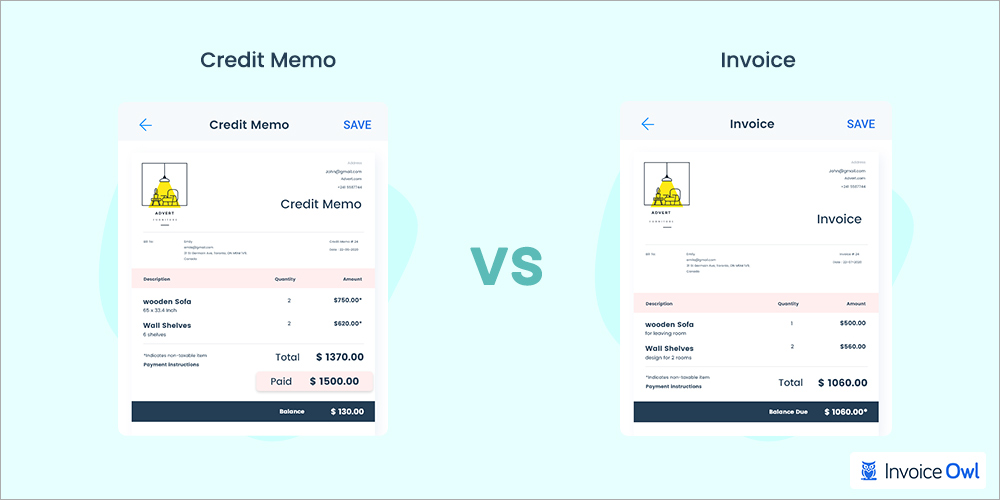
Credit Memo vs Invoice: A Complete Comparison Guide
Credit memos and invoices are different documents that you must learn about. As a contractor, you will need both of them. Therefore, let's compare them and know more about them.
Read more
Accounting Invoice Template
Accounting Invoice Template
Read more
Free Construction Invoice Template | Customize and Download
Free Construction Invoice Template | Customize and Download
Read more
Contractor Invoice Template
Contractor Invoice Template
Read more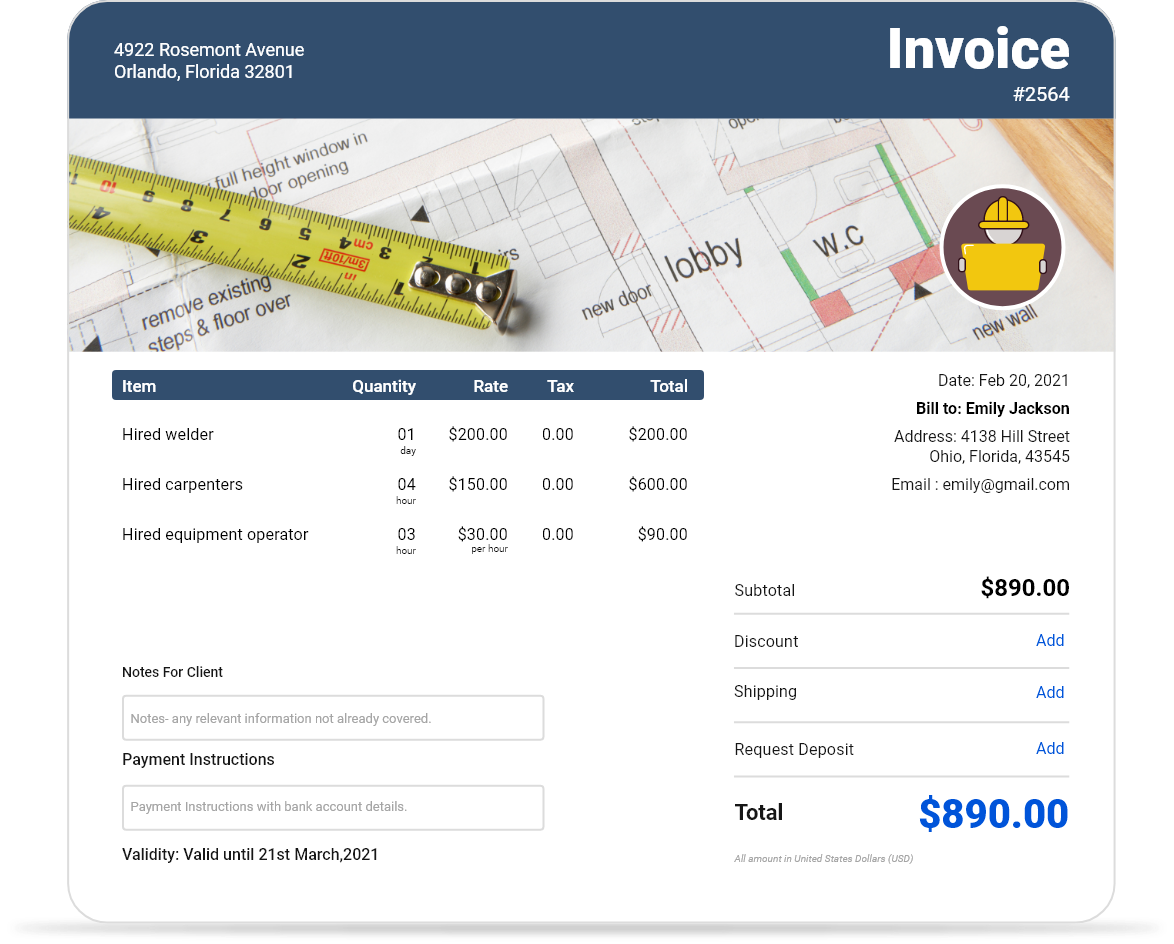
Subcontractor Invoice Template
Subcontractor Invoice Template
Read more5 Step Guide on How to Pay Independent Subcontractors
Learn best practices for paying independent subcontractors with this complete guide. From tax considerations to payment methods, stay compliant and efficient.
Read more6 Best Construction Estimating Software Contractors Should Try
Associated with the construction industry for a while? Explore 6 most popular estimator software to reduce your business paperwork. Follow the given steps to make construction estimates using automated accounting software.
Read moreContractor Payment Terms: Standard Terms, Examples & Late-Fee Language
What payment terms contractors actually use. Net 30, deposits, progress payments, 2/10 Net 30, and late-fee language, with examples for residential and commercial work.
Read moreCredit Memo vs Invoice: A Complete Comparison Guide
Credit memos and invoices are different documents that you must learn about. As a contractor, you will need both of them. Therefore, let's compare them and know more about them.
Read moreAccounting Invoice Template
Accounting Invoice Template
Read moreFree Construction Invoice Template | Customize and Download
Free Construction Invoice Template | Customize and Download
Read moreContractor Invoice Template
Contractor Invoice Template
Read moreSubcontractor Invoice Template
Subcontractor Invoice Template
Read more5 Step Guide on How to Pay Independent Subcontractors
Learn best practices for paying independent subcontractors with this complete guide. From tax considerations to payment methods, stay compliant and efficient.
Read more6 Best Construction Estimating Software Contractors Should Try
Associated with the construction industry for a while? Explore 6 most popular estimator software to reduce your business paperwork. Follow the given steps to make construction estimates using automated accounting software.
Read moreContractor Payment Terms: Standard Terms, Examples & Late-Fee Language
What payment terms contractors actually use. Net 30, deposits, progress payments, 2/10 Net 30, and late-fee language, with examples for residential and commercial work.
Read moreCredit Memo vs Invoice: A Complete Comparison Guide
Credit memos and invoices are different documents that you must learn about. As a contractor, you will need both of them. Therefore, let's compare them and know more about them.
Read moreAccounting Invoice Template
Accounting Invoice Template
Read moreFree Construction Invoice Template | Customize and Download
Free Construction Invoice Template | Customize and Download
Read moreContractor Invoice Template
Contractor Invoice Template
Read moreSubcontractor Invoice Template
Subcontractor Invoice Template
Read more