
Key Takeaways
- 01In most U.S. states, you can legally add a credit card surcharge — but Connecticut, Massachusetts, and Maine still prohibit it, and several other states cap or regulate it
- 02Card networks cap surcharges at 3% of the transaction, and your surcharge can never exceed what card processing actually costs you
- 03You can never surcharge a debit or prepaid card, even when the customer runs it as 'credit' without a PIN
- 04You must disclose the fee before the customer pays — on your estimate, your invoice, and any posted signage — and show it as a separate line item
- 05A cash discount (charging less for cash or check) is legal in every state and often feels fairer to customers than a surcharge
Short answer: yes, in most states you can charge customers a credit card fee — called a surcharge — as long as you follow your state's law and the card networks' rules. As of late 2026, Connecticut, Massachusetts, and Maine still prohibit surcharging outright (Puerto Rico does too), several states cap the amount, and the networks limit any surcharge to 3% of the transaction. You also must tell customers about the fee before they pay, and you can never add it to a debit card.
That's the summary. The rest of this guide walks through the rules in plain language, shows the math on a real job, and covers the two alternatives — convenience fees and cash discounts — so you can pick the approach that fits how you collect payment from customers.
Surcharge, Convenience Fee, or Cash Discount?
These three terms get mixed up constantly, and the legal rules are different for each one. Here's the difference:
Three Ways to Offset Card Processing Costs
| Approach | What it is | Where it's allowed |
|---|---|---|
| Surcharge | A percentage fee added when the customer chooses to pay by credit card | Most states — but banned in CT, MA, and ME, and capped in several others |
| Convenience fee | A flat fee for paying through a non-standard channel (e.g., paying by phone when you normally invoice by mail) | Allowed under network rules only in narrow situations — the fee is for the channel, not the card |
| Cash discount | A lower price for customers who pay by cash or check, off a posted card price | Legal in every state, including the ones that ban surcharges |
Most contractors asking "can I charge a card fee" mean a surcharge — a percentage added at payment time because the customer pulled out a credit card. That's what the rules below cover.
Federal rules and card network rules prohibit surcharging debit and prepaid cards everywhere in the U.S. — even when the customer signs for the purchase instead of entering a PIN. If your fee gets applied to debit cards automatically, you're out of compliance no matter what state you're in. Make sure your payment setup can tell card types apart.
Is It Legal in Your State?
Surcharging is legal in most of the country, but state law is where you have to check first. As of late 2026:
- Prohibited: Connecticut, Massachusetts, and Maine ban credit card surcharges outright, and Puerto Rico does as well. All of them still allow cash discounts.
- Capped at 2%: Colorado allows surcharging but caps it at 2% of the transaction (or your actual processing cost, if lower).
- Capped at your actual cost: Several states — including New York, New Jersey, Georgia, Nevada, South Dakota, and Nebraska — allow surcharging but say the fee can't exceed what the transaction actually costs you to process.
- Disclosure rules: New York also requires you to display the total price the customer will pay including the surcharge before checkout — a violation can cost $500 per occurrence. Other states have their own posting requirements.
- Everywhere else: Generally legal, subject to the card network rules below.
Surcharge laws have been in motion for a decade: bans in states like New York, Texas, and California were struck down in court, new caps keep being added, and legislatures revisit the topic every session. Before you add a fee, check your state attorney general's guidance or ask your payment processor — most publish current state-by-state rules because their compliance depends on them.
The Card Network Rules
Even where state law allows surcharging, Visa and Mastercard set conditions through your processing agreement. Break them and your processor can shut off your ability to take cards — which hurts a lot more than the fee ever helped. The core rules:
- 3% maximum. Visa capped surcharges at 3% in 2023, and in practice that's the ceiling to plan around. Your surcharge also can't exceed your actual cost of acceptance — if processing costs you 2.6%, you can't charge 3%.
- Credit cards only. No surcharges on debit or prepaid cards, ever.
- Tell your processor first. Networks require advance notice — commonly 30 days — before you start surcharging. Most processors have a simple form for this; some handle the registration for you.
- Disclose before payment. Customers must see the surcharge before they pay: on signage at your point of sale, on your website if you take payments there, and on the estimate or invoice itself.
- Separate line item. The surcharge has to appear as its own line on the receipt or invoice, not buried in the job total.
What the Fee Actually Recovers: a Worked Example
Say you invoice $4,000 for a water heater replacement, and your processor charges 2.9% plus 30¢ per transaction. If the customer pays by credit card, processing costs you $116.30 — real money that came straight out of your margin.
Here's how the three approaches compare on that job:
Example: $4,000 Job, 2.9% + 30¢ Processing
| Approach | Customer pays | You keep (before other costs) |
|---|---|---|
| No fee, absorb the cost | $4,000.00 | $3,883.70 |
| 2.9% surcharge (at your actual cost) | $4,116.00 | $3,996.34 |
| Cash discount: $4,120 card price, $4,000 cash price | $4,000.00 cash or $4,120.00 card | $4,000.00 cash / $4,000.22 card |
(Notice the surcharge doesn't make you perfectly whole — the fee itself gets processed too, so you're still a few dollars short of the full $4,000. Close enough for most contractors, but that's why some price the job with card costs built in instead.)
The numbers above are an example, not market data — plug in your own volume and processing rate. If you take $200,000 a year by card at around 3%, you're handing your processor roughly $6,000 annually. That's the decision you're actually making: recover it with a fee, price it in, or push customers toward cheaper payment methods like checks or ACH bank transfers, which typically cost far less per transaction.
How to Start Charging a Card Fee the Right Way
Check your state's current law
Confirm surcharging is legal where you work — and where your customers are, if you cross state lines. Skip to a cash-discount model if you're in Connecticut, Massachusetts, or Maine.
Notify your processor
Tell your payment processor you plan to surcharge. Expect roughly 30 days of lead time, and ask them to confirm your setup excludes debit and prepaid cards automatically.
Set the fee at or below your actual cost
Look up your effective processing rate on your monthly statement. Your surcharge can't exceed it, and it can never top 3% regardless of what you pay.
Disclose it everywhere the customer sees a price
Put the fee on your estimates, your invoices, your website's payment page, and signage if you take cards in person. Surprising a customer at payment time is how you lose the next job — and in some states it's also how you break the law.
Show it as a separate line item
List the surcharge on its own line with the percentage, so the customer can see exactly what the card cost them. Good invoicing software does this automatically.
Keep your records
Save your processor notice, your statements showing actual cost, and copies of your disclosures. If a customer or regulator ever questions the fee, that paper trail is your answer.
Take Card Payments Without the Paperwork Headache
InvoiceOwl lets you send professional invoices and accept online payments, with every fee shown as a clear line item your customers can see.
Start Your FREE TrialShould You Surcharge at All?
Legal isn't the same as smart. Plenty of contractors who can surcharge choose not to — and plenty who do are glad they did. The honest trade-offs:
- Recovers 2–3% of every card transaction that was silently eroding your margin
- Keeps your posted prices lower than building card costs into every quote
- Nudges customers toward cheaper payment methods like check or bank transfer
- Costs nothing to implement beyond a processor notice and updated invoices
- Some customers read any added fee as nickel-and-diming, especially on big-ticket jobs
- Compliance is on you: state caps, debit exclusion, and disclosure rules all have to be right
- Competitors who absorb card fees can pitch 'no card fees' against you
- More line items and more explaining at exactly the moment you want payment friction lowest
A rule of thumb: the bigger your average invoice and the tighter your margins, the stronger the case for surcharging or cash discounting. On small service calls, many contractors find it easier to build processing costs into their payment terms and pricing, and let the convenience of paying by card help them get paid faster — a card payment today usually beats a check that needs chasing for two weeks.
If you'd rather not add any fee, you don't have to treat card costs as untouchable. Reprice your work with the fee built in — even a 1% bump across your rates usually covers it — and put your prices in front of customers with a professional free invoice generator or template so the total is clear from the start.
Frequently Asked Questions
No. Debit and prepaid card surcharges are prohibited everywhere in the U.S., even when the card is run as "credit" with a signature instead of a PIN. Surcharges apply to credit cards only, and your payment setup needs to distinguish card types automatically.
The card networks cap surcharges at 3% of the transaction, and the fee can never exceed your actual cost of processing. Some states set lower limits — Colorado caps surcharges at 2%, and states like New York and New Jersey limit them to your actual processing cost. Check your state's current rules before setting a number.
Yes. Network rules require disclosure before payment — on signage, on your website, and on the invoice — and the surcharge must appear as a separate line item on the receipt. Some states add their own requirements: New York, for example, requires showing the full total including the surcharge before checkout.
A surcharge is a percentage added because the customer paid by credit card. A convenience fee is a flat fee for using a non-standard payment channel — like paying by phone when you normally bill by mail — and it applies regardless of card type. The network rules for convenience fees are narrow, so ask your processor before charging one.
Yes — cash discounting is legal in all 50 states, including the ones that ban surcharges. The key is doing it honestly: post your regular (card) price and offer a genuine discount for cash or check. Programs that quietly add a percentage at the register and call it a "cash discount" are treated as surcharges by regulators and card networks.
State penalties vary — New York's disclosure violations run $500 per occurrence, and state consumer protection laws elsewhere carry their own fines. Separately, violating network rules can get your merchant account flagged or terminated by your processor, which means losing the ability to take cards at all. The rules are easy to follow; it's not worth winging.
Conclusion
You can charge customers a credit card fee in most of the country — capped at 3%, never on debit cards, always disclosed up front, and only where your state allows it. Whether you should depends on your average ticket, your margins, and your customers. Surcharge, discount for cash, or build the cost into your prices: any of the three beats quietly losing 3% of every card payment and never noticing.
Whichever route you take, make the fee visible and the invoice professional. InvoiceOwl's online payment features let clients pay invoices by card the moment they receive them, with every charge itemized — so you get paid faster and nobody is surprised by a number.
Related Resources

How to Improve Cash Flow for Small Business: Expert Guide
Learn strategies for how to improve cash flow for small business, including managing expenses, invoicing promptly, and exploring financing options.
Read more
Invoicing Software for Mac in 2026 (Features & Pricing Compared)
Discover the best invoicing and billing software for Mac, MacBook, and macOS. Explore free trial apps with top features, pricing, and seamless invoicing tools.
Read more
12 Best Snow Removal Business Software to Consider This Season
Snow removal business software helps organize operations, estimate costs, invoice, and receive payments all in one place to impress customers.
Read more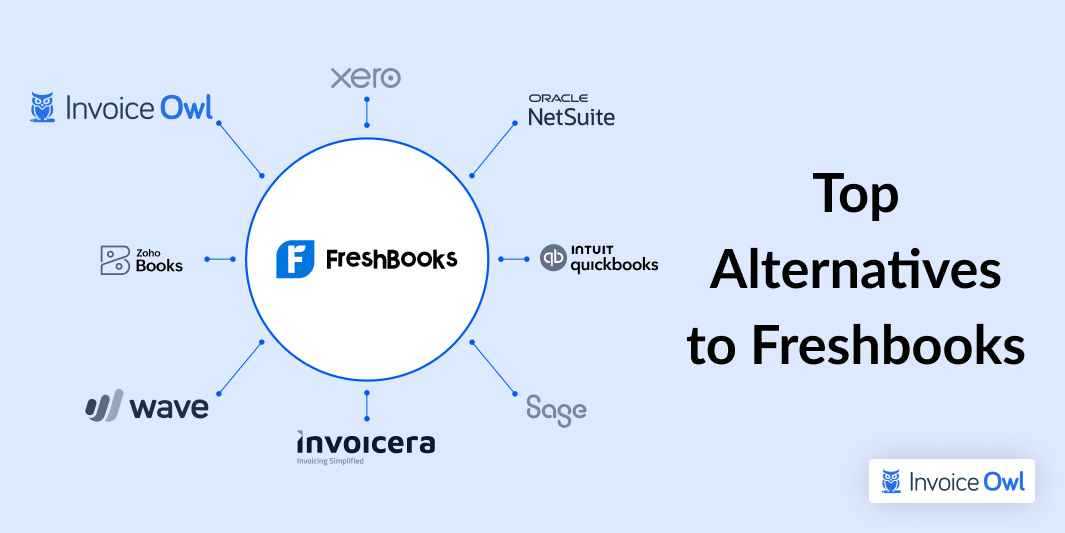
Top 10 FreshBooks Alternatives for Efficient Invoice Management in 2025
Explore the top alternatives to FreshBooks for 2026. Compare features and pricing to find the best fit for your business needs.
Read more
10 Best QuickBooks Alternatives You Should Consider
Looking for a QuickBooks alternatives? Discover the top 10 invoice software options for businesses in 2025 that fit your pricing & feature requirements.
Read more
9 Lesser-known Benefits of Billing Software
Want to improve the cash flow? Read the benefits of billing software and how that will help you to automate your daily activities.
Read more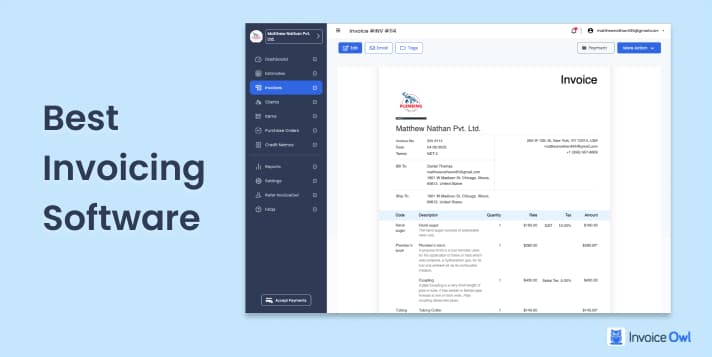
Best Invoicing Software for Small Businesses (2026)
Compare the top invoicing software solutions for small businesses and contractors. Find detailed reviews, pricing, features, and user feedback to choose the right tool for your needs.
Read more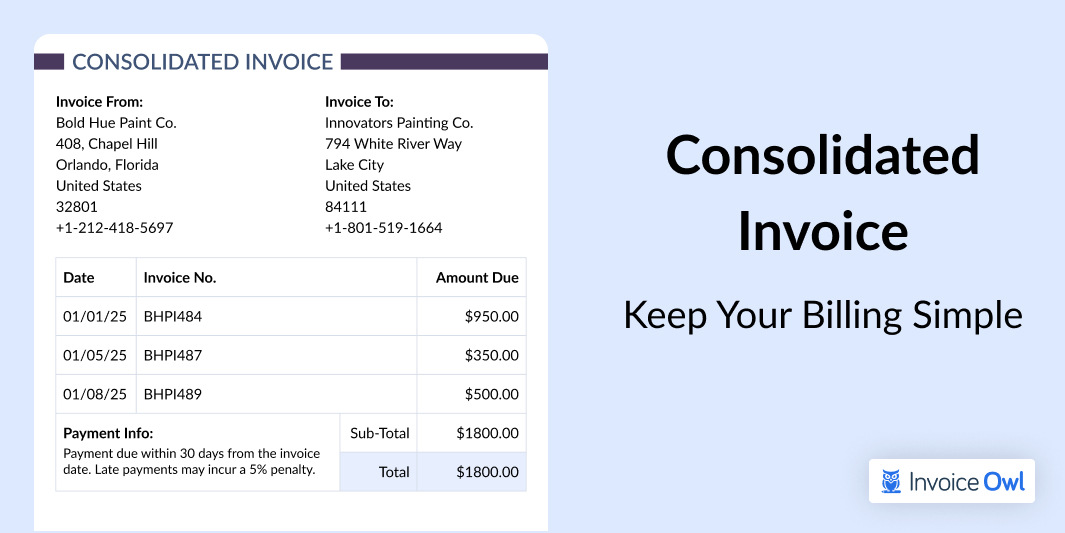
How Can a Consolidated Invoice Boost Your Business's Success?
Explore our comprehensive guide on a consolidated invoice as you simplify your billing, improve cash flow, and gain insights into efficient invoicing practices.
Read moreHow to Improve Cash Flow for Small Business: Expert Guide
Learn strategies for how to improve cash flow for small business, including managing expenses, invoicing promptly, and exploring financing options.
Read moreInvoicing Software for Mac in 2026 (Features & Pricing Compared)
Discover the best invoicing and billing software for Mac, MacBook, and macOS. Explore free trial apps with top features, pricing, and seamless invoicing tools.
Read more12 Best Snow Removal Business Software to Consider This Season
Snow removal business software helps organize operations, estimate costs, invoice, and receive payments all in one place to impress customers.
Read moreTop 10 FreshBooks Alternatives for Efficient Invoice Management in 2025
Explore the top alternatives to FreshBooks for 2026. Compare features and pricing to find the best fit for your business needs.
Read more10 Best QuickBooks Alternatives You Should Consider
Looking for a QuickBooks alternatives? Discover the top 10 invoice software options for businesses in 2025 that fit your pricing & feature requirements.
Read more9 Lesser-known Benefits of Billing Software
Want to improve the cash flow? Read the benefits of billing software and how that will help you to automate your daily activities.
Read moreBest Invoicing Software for Small Businesses (2026)
Compare the top invoicing software solutions for small businesses and contractors. Find detailed reviews, pricing, features, and user feedback to choose the right tool for your needs.
Read moreHow Can a Consolidated Invoice Boost Your Business's Success?
Explore our comprehensive guide on a consolidated invoice as you simplify your billing, improve cash flow, and gain insights into efficient invoicing practices.
Read moreHow to Improve Cash Flow for Small Business: Expert Guide
Learn strategies for how to improve cash flow for small business, including managing expenses, invoicing promptly, and exploring financing options.
Read moreInvoicing Software for Mac in 2026 (Features & Pricing Compared)
Discover the best invoicing and billing software for Mac, MacBook, and macOS. Explore free trial apps with top features, pricing, and seamless invoicing tools.
Read more12 Best Snow Removal Business Software to Consider This Season
Snow removal business software helps organize operations, estimate costs, invoice, and receive payments all in one place to impress customers.
Read moreTop 10 FreshBooks Alternatives for Efficient Invoice Management in 2025
Explore the top alternatives to FreshBooks for 2026. Compare features and pricing to find the best fit for your business needs.
Read more10 Best QuickBooks Alternatives You Should Consider
Looking for a QuickBooks alternatives? Discover the top 10 invoice software options for businesses in 2025 that fit your pricing & feature requirements.
Read more9 Lesser-known Benefits of Billing Software
Want to improve the cash flow? Read the benefits of billing software and how that will help you to automate your daily activities.
Read moreBest Invoicing Software for Small Businesses (2026)
Compare the top invoicing software solutions for small businesses and contractors. Find detailed reviews, pricing, features, and user feedback to choose the right tool for your needs.
Read moreHow Can a Consolidated Invoice Boost Your Business's Success?
Explore our comprehensive guide on a consolidated invoice as you simplify your billing, improve cash flow, and gain insights into efficient invoicing practices.
Read more