
Key Takeaways
- 01You can start a junk removal business with a used truck or trailer, basic tools, insurance, and a business license - no trade certification required in most states
- 02Published 2026 cost guides put typical job prices at $150-$350, with full truckloads running roughly $550-$850, so two or three jobs a day adds up fast
- 03Disposal is your recurring cost: landfill tipping fees average around $62 per ton nationally but vary widely by state, and donating or recycling can cut them
- 04Hauling for hire usually requires commercial auto insurance and sometimes extra permits - requirements vary by state and city, so verify locally before your first job
- 05Decide your pricing before you market: quote by truckload fraction, set a minimum charge, and put every quote in writing
Junk removal is one of the most accessible service businesses to start: if you can drive, lift, and show up on time, you can be earning within weeks. The core requirements are a truck or trailer, commercial auto and liability insurance, a business license, and a place to legally dump what you haul. Most operators start solo or with one helper and price by how much of the truck a load fills.
This guide covers the seven steps to go from idea to first paying customer — choosing your niche, registering, equipping, insuring, pricing, disposing, and marketing — plus a realistic look at startup costs and what you can earn.
Is Junk Removal a Good Business to Start?
Demand is steady and broad: homeowners clearing garages and basements, landlords turning over rentals, realtors prepping listings, families handling estate cleanouts, and contractors who need debris gone. The work is recession-resistant — people generate junk in good times and bad — and repeat and referral business is strong for operators who show up when they say they will.
The catch: it's physical work, your truck is your livelihood, and your margins live or die on how well you manage disposal costs and route efficiency. The steps below are about getting those fundamentals right from day one.
How to Start a Junk Removal Business in 7 Steps
Step 1: Choose your niche and write a simple plan
"Junk removal" covers a lot of ground. Deciding what you'll haul — and what you won't — shapes your equipment, insurance, and marketing. Common niches:
- Residential junk removal: garage, basement, and attic cleanouts; furniture and appliance pickups. The easiest entry point.
- Estate and hoarding cleanouts: larger, higher-ticket jobs that reward patience and discretion.
- Rental turnovers: steady repeat work from landlords and property managers.
- Construction and demolition debris: heavier loads, higher disposal fees, and contractors who need reliability more than the lowest price.
- Commercial cleanouts: offices, storage units, and retail spaces.
Your plan doesn't need to be long. Write down who you'll serve, your service area (fuel and drive time eat margins fast beyond about 30 minutes), what you'll charge, and your first-90-days revenue goal.
Most successful operators start with residential pickups in a tight service area, then add construction debris or commercial contracts once the truck is paying for itself.
Step 2: Register your business and get licensed
Register your business entity — most solo operators start as an LLC for the liability protection, since you'll be hauling other people's property through traffic every day. Get an EIN from the IRS (free, takes minutes online) so you can open a business bank account.
Licensing for junk removal varies by state and city. Beyond a general business license, some jurisdictions require waste hauler permits or registration to transport certain materials, and hazardous waste (paint, chemicals, refrigerants) is regulated everywhere — most small operators simply decline it. Check your state and city business resources, and ask your local landfill what documentation they require from commercial haulers.
Waste hauling rules vary by state, county, and city — some areas require specific hauler permits or dump-site accounts. Verify with your local government and disposal facilities before your first paid job.
Step 3: Get your truck and equipment
Your two realistic options starting out:
- Pickup truck with a dump trailer: the cheapest entry. A used trailer plus the truck you may already own keeps startup costs low, and a dump trailer saves your back at the landfill.
- Box truck or dump-bed truck: higher capacity and a more professional look, but a bigger upfront cost and higher insurance.
Either way, buy used to start. The truck doesn't earn more because it's new.
Step 4: Get insured
Don't skip this step or leave it for later — you're lifting heavy items inside customers' homes and hauling loads on public roads. At minimum, talk to an agent about:
- General liability insurance: covers property damage and injuries at the job site — the scratched floor, the doorframe, the customer who trips over your dolly.
- Commercial auto insurance: your personal auto policy almost certainly excludes business hauling. This is usually the biggest line item.
- Workers' compensation: required in most states once you hire employees.
- Inland marine / equipment coverage: protects your tools and trailer.
Costs depend on your vehicle, location, and coverage limits — get quotes from two or three agents who work with hauling or trades businesses. Our contractor insurance cost guide explains the main coverage types in plain language.
Step 5: Set your prices
Price by volume like the rest of the industry: quote by the fraction of the truck a load fills, with a minimum charge (commonly $75–$150) so tiny jobs still cover your drive time. Published 2026 cost guides put minimum loads at $60–$150, half truckloads at $250–$400, and full truckloads at roughly $550–$850 — but your costs decide your floor.
For every quote, add up labor, fuel and vehicle costs, and disposal fees, then add your markup. Our full guide on how to price a junk removal job walks through the formula with a worked example, and a free markup calculator shows what different markups do to your margin.
Put every quote in writing before the truck rolls. A written estimate — even for a $150 pickup — prevents the "you said it would be less" conversation and looks more professional than a number over the phone. A ready-made junk removal estimate template gets you there in minutes.
Step 6: Line up your disposal options
Where the junk goes is your business model. Before your first job, know:
- Your landfill or transfer station: location, hours, rates, and accepted materials. Tipping fees average around $62 per ton nationally but range from roughly $30 to over $100 depending on your state — build your local rate into every quote.
- Per-item surcharges: mattresses, tires, appliances with refrigerant, and electronics often cost extra to dump. Price them accordingly.
- Donation partners: charities that accept furniture and working appliances can turn a disposal cost into a selling point ("we donate what we can").
- Recycling: scrap metal actually pays you, and separating cardboard, metal, and clean wood can meaningfully cut your landfill tonnage.
A load that's 30% donatable furniture and 20% scrap metal costs far less to dispose of than a full landfill load — and "eco-friendly junk removal" is a marketing angle customers respond to.
Step 7: Market your business and land your first jobs
Junk removal is bought in a hurry — someone's moving Friday, or the fridge died — so show up where people search in that moment:
- Google Business Profile: free, and the single highest-leverage listing for "junk removal near me" searches. Collect a review after every job.
- A simple website: your service area, what you haul, your minimum charge, and a phone number. Basic SEO for contractors applies directly.
- Realtors, landlords, and property managers: a handful of these relationships can fill your calendar with repeat turnovers and cleanouts.
- Neighborhood apps and yard signs: Nextdoor, Facebook groups, and signs at busy intersections punch above their weight for local services.
Answer your phone, quote fast, and show up on time — in this trade, responsiveness wins more jobs than price. For more tactics, see our roundup of marketing strategies for contractors.
What Does It Cost to Start a Junk Removal Business?
Your startup cost depends almost entirely on the vehicle. Here's a realistic example budget for a solo operator who already owns a pickup truck and buys a used dump trailer:
Example Startup Budget (Solo, Own Truck, Used Trailer)
| Item | Example cost |
|---|---|
| Used dump trailer | $4,000-$8,000 |
| Business registration, LLC filing, and licenses | $100-$800 (varies by state) |
| Insurance down payment (liability + commercial auto) | $500-$1,500 |
| Hand tools, dollies, straps, and safety gear | $500-$1,000 |
| Google Business Profile, website, and initial marketing | $0-$1,000 |
| Estimating and invoicing software | $0-$40/month |
These are example figures to plan against, not quotes — trailer prices, state fees, and insurance premiums all vary by market. Starting with a box truck instead pushes the total up significantly; starting with just a pickup bed and no trailer pulls it down, at the cost of more landfill trips.
How Much Can You Make?
Do the math from the job level up. Say you average $250 per job and complete two jobs a day, four days a week: that's $2,000 a week in revenue. From that, subtract disposal fees, fuel, insurance, and maintenance — commonly a third or more of revenue for a solo operator — and the rest pays you and grows the business. Three jobs a day with a helper changes the picture again: more revenue, but wages and workers' comp join the cost side.
The levers that matter most: route density (jobs close together), sorting loads to cut tipping fees, and pricing discipline — which is exactly why you set your pricing before you print the first yard sign.
Look Professional From Your First Job
Quote on-site, send branded estimates and invoices, collect e-signatures, and get paid faster with InvoiceOwl - built for service businesses like junk removal.
Start Your FREE TrialFrequently Asked Questions
You'll need a general business license, and some states, counties, or cities also require waste hauler permits or registration to transport certain materials. Hazardous waste is regulated everywhere and most small operators decline it. Requirements vary by location, so check your state and city business resources and ask your local landfill what they require from commercial haulers.
Yes — plenty of operators start with a pickup and a set of ratchet straps. The tradeoffs are smaller loads (so more landfill trips per job) and a harder time quoting full-truckload cleanouts. A used dump trailer is the most common first upgrade because it multiplies capacity without the cost of a box truck.
Price by volume with a minimum charge. Published 2026 cost guides put minimum loads at $60-$150, half truckloads at $250-$400, and full truckloads at roughly $550-$850, with most jobs landing between $150 and $350. Work out your own labor, fuel, and disposal costs first so you know your floor — our guide on how to price a junk removal job shows the full formula.
Most small operators decline hazardous materials: paint, solvents, chemicals, asbestos, medical waste, and anything with refrigerant unless they're certified to handle it. These carry legal disposal requirements and liability that aren't worth the fee. Know your landfill's prohibited-items list and put your own list on your website so customers know before they call.
It can be. Overhead is low, and at typical rates a couple of jobs a day generates solid revenue. Profit depends on route density, disposal costs, and pricing discipline — solo operators who quote too low or drive long distances between small jobs are the ones who struggle. Track every job's disposal fees and drive time so you learn quickly which work is worth taking.
Conclusion
Starting a junk removal business comes down to fundamentals: a reliable truck, real insurance, a legal place to dump, prices that cover your costs, and marketing that reaches people the moment they need junk gone. None of it requires special certification — it requires showing up, quoting clearly, and knowing your numbers.
Handle the paperwork side from day one, too. With estimating software like InvoiceOwl, you can quote a cleanout on-site from your phone, convert the estimate to an invoice when the truck is loaded, and accept payment before you leave the driveway. There's a free trial to see if it fits how you work.
Related Resources
How to Price a Junk Removal Job: A Detailed Guide
Learn how to price a junk removal job for maximum profit: typical rates by load size, the cost factors that matter, and a simple formula with a worked example.
Read more
14 Actionable Accounting Tips for Small Business Owners
New to finance? Discover 14 simple small business accounting tips to track revenues, expenses, and costs, and grow your business effectively.
Read more![What is the Accounts Payable Process? [Definition, Challenges & Full Cycle]](/images/2021/06/accounts-payable-process.jpg)
What is the Accounts Payable Process? [Definition, Challenges & Full Cycle]
Understand in detail what is the accounts payable process and why it is significant for small business owners. Also, check out what are the challenges faced during the process before going through its full cycle.
Read more
Maximize Your Margins With Profitability Tips for Appliance Repair Businesses
Discover strategies to increase profitability in your appliance repair business and boost your margins with essential tips for success.
Read more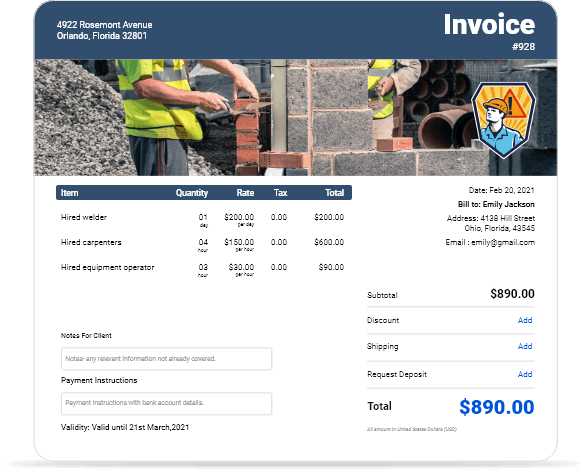
Contract Labor Invoice Template
Contract Labor Invoice Template
Read more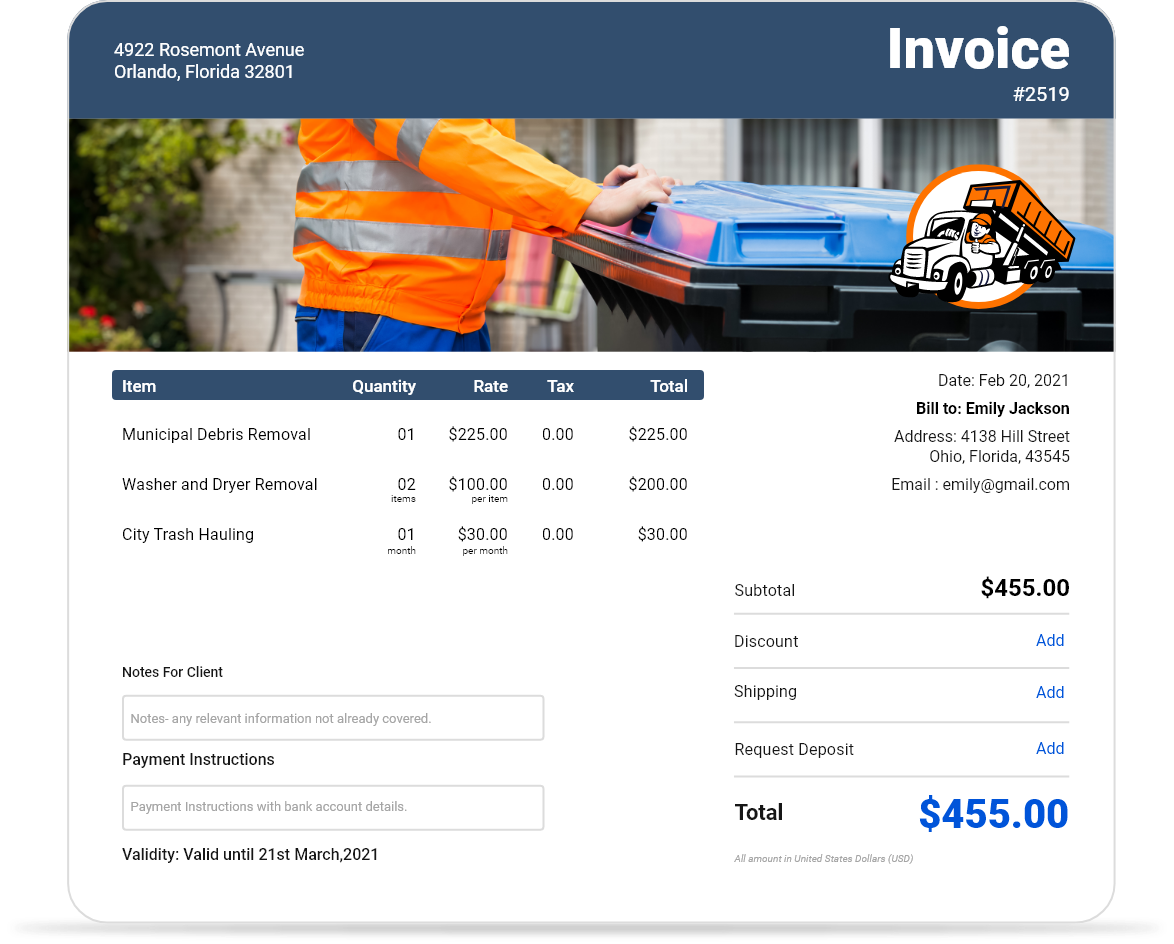
Junk Removal Invoice Template
Junk Removal Invoice Template
Read more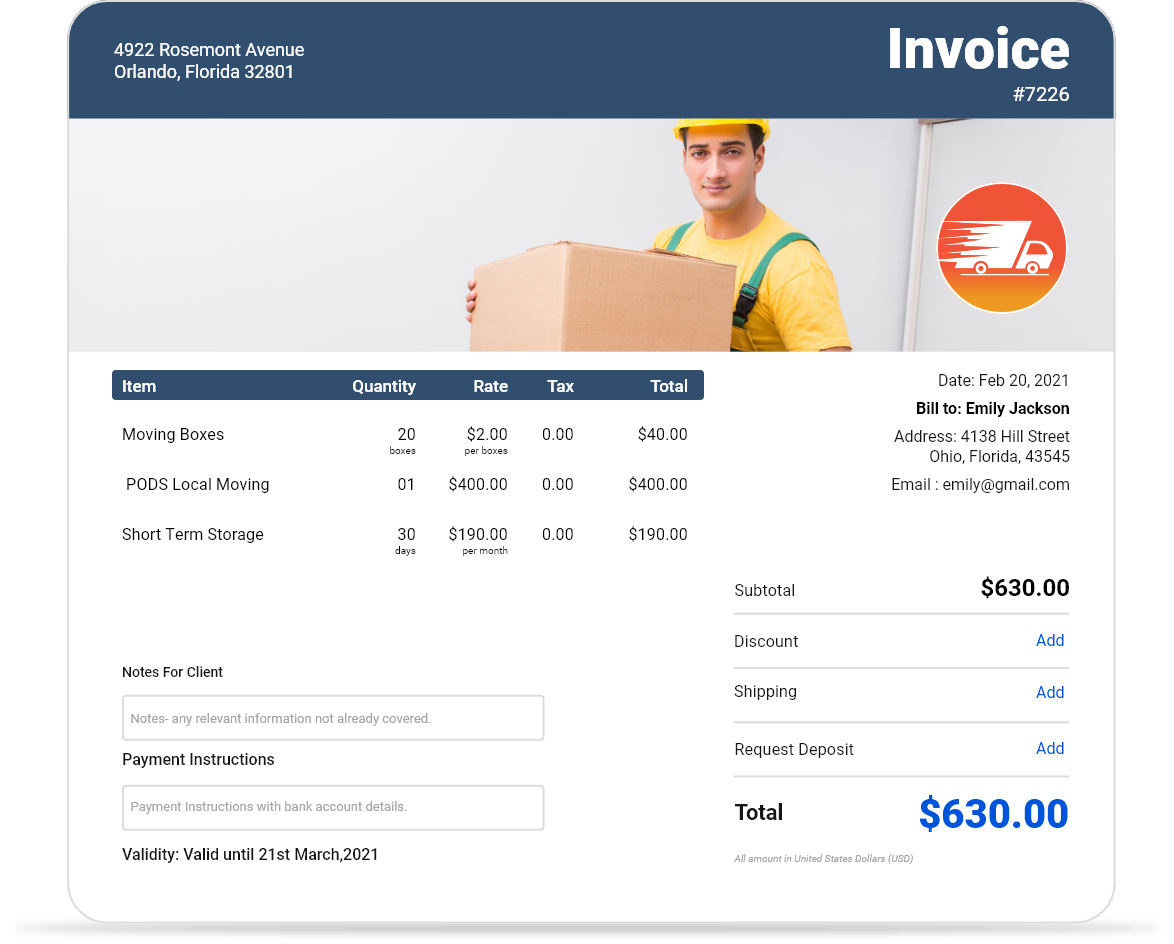
Moving Company Invoice Template
Moving Company Invoice Template
Read more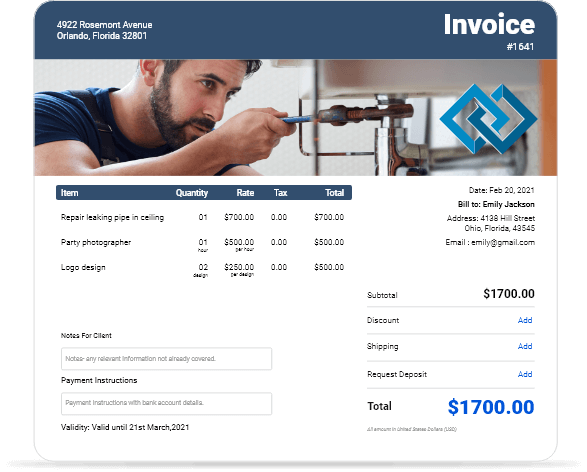
Small Business Invoice Template
Small Business Invoice Template
Read moreHow to Price a Junk Removal Job: A Detailed Guide
Learn how to price a junk removal job for maximum profit: typical rates by load size, the cost factors that matter, and a simple formula with a worked example.
Read more14 Actionable Accounting Tips for Small Business Owners
New to finance? Discover 14 simple small business accounting tips to track revenues, expenses, and costs, and grow your business effectively.
Read moreWhat is the Accounts Payable Process? [Definition, Challenges & Full Cycle]
Understand in detail what is the accounts payable process and why it is significant for small business owners. Also, check out what are the challenges faced during the process before going through its full cycle.
Read moreMaximize Your Margins With Profitability Tips for Appliance Repair Businesses
Discover strategies to increase profitability in your appliance repair business and boost your margins with essential tips for success.
Read moreContract Labor Invoice Template
Contract Labor Invoice Template
Read moreJunk Removal Invoice Template
Junk Removal Invoice Template
Read moreMoving Company Invoice Template
Moving Company Invoice Template
Read moreSmall Business Invoice Template
Small Business Invoice Template
Read moreHow to Price a Junk Removal Job: A Detailed Guide
Learn how to price a junk removal job for maximum profit: typical rates by load size, the cost factors that matter, and a simple formula with a worked example.
Read more14 Actionable Accounting Tips for Small Business Owners
New to finance? Discover 14 simple small business accounting tips to track revenues, expenses, and costs, and grow your business effectively.
Read moreWhat is the Accounts Payable Process? [Definition, Challenges & Full Cycle]
Understand in detail what is the accounts payable process and why it is significant for small business owners. Also, check out what are the challenges faced during the process before going through its full cycle.
Read moreMaximize Your Margins With Profitability Tips for Appliance Repair Businesses
Discover strategies to increase profitability in your appliance repair business and boost your margins with essential tips for success.
Read moreContract Labor Invoice Template
Contract Labor Invoice Template
Read moreJunk Removal Invoice Template
Junk Removal Invoice Template
Read moreMoving Company Invoice Template
Moving Company Invoice Template
Read moreSmall Business Invoice Template
Small Business Invoice Template
Read more